
The UN Security Council, with India's support, has adopted a resolution condemning Iran's attacks on Gulf Cooperation Council countries and Jordan, demanding an immediate cessation of hostilities and denouncing threats to the Strait of Hormuz.

The IRGC accused US and Israeli forces of using civilians as 'human shields' and warned of continued attacks.

The Centre on Monday informed the Supreme Court that the Central Board of Secondary Examination has come up with a new policy for the evaluation of private students, who were affected by the cancellation of Class XII board examination in Gulf countries due to the recent Iran-US war.

The Gulf countries on Monday welcomed a peace deal reached between the US and Iran to end their conflict and called for protection of maritime routes and freedom of international navigation, including the uninterrupted flow of traffic through the Strait of Hormuz.

'It will take a long time to recover from the impact of this war.'

Non-resident Indians (NRIs) in the Gulf region are increasingly purchasing term life insurance policies from India, driven by geopolitical uncertainties in West Asia and the significant cost advantages offered by Indian products, with the GCC region now contributing over half of the total NRI demand.

Donald Trump announced he is replacing the 20% reimbursement fee for securing the Strait of Hormuz with massive trade and investment deals from Gulf States into the United States, while maintaining a full blockade on Iranian ship traffic.

Former US President Donald Trump stated that Gulf nations should reimburse the United States for safeguarding maritime traffic through the Strait of Hormuz, while asserting that recent American military interventions have profoundly crippled Iran's military capabilities, claiming Iran has been "brought back to the Stone Ages."

Not a single retail outlet ran dry. Every household that wanted a cylinder got one. India faced neither a 1991 moment nor a 2013 one. Macroeconomic stability held. This was not an accident, and it was not luck alone. It was the work of a government that chose to act as it had during the pandemic -- deliberately and gradually, building one measure upon another rather than reaching for a single dramatic lever, explains V Anantha Nageswaran, chief economic advisor to the Government of India.

Nepal is actively involved in rescuing its citizens from Gulf countries due to escalating tensions in West Asia, with thousands registering to return home. The government is committed to ensuring the safety of Nepalese citizens in the region and has formed an Emergency Response Team to manage the crisis.
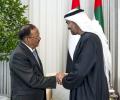
India is the only significant power that all parties trust, or at least do not distrust, notes former defence secretary Ajay Kumar.

The United States is facing growing discontent from its Gulf allies after several countries in the region complained that they were not given advance notice of the US-Israel strike on Iran that triggered widespread retaliatory attacks, according to media reports.

A source familiar with US Treasury Secretary Scott Bessent's thinking revealed on Saturday that the department "intends to utilise all available authorities to make Iranian assets accessible for rebuilding and repair efforts related to any future damage inflicted by Iran."

Kerala Chief Minister Pinarayi Vijayan has expressed concern over the situation in the Gulf region following the US-Israel attack on Iran and has urged the central government to take necessary steps to ensure the safety of Indian nationals residing there.

Data reveals a disturbing trend of Indian worker deaths abroad, particularly in Gulf nations, alongside numerous complaints of exploitation and labour rights violations.

India has condemned the attack on the Cyprus-flagged container ship M/V GFS Galaxy in the Strait of Hormuz, which resulted in one Indian crew member going missing. The United States responded with a third round of retaliatory strikes against Iranian targets, further escalating tensions in the Gulf.

Kerala Chief Minister Pinarayi Vijayan held an online meeting with Loka Kerala Sabha members in the Gulf region to discuss support for the expatriate community amidst the escalating conflict in West Asia.

'If movement remains stalled for three to four months, more than 300,000 recruitments from India could be affected.'

The PCB will build a cricket stadium as per international standards and with state-of-the-art facilities, said the Pakistan Cricket Board.

'Refiners may soon be forced to adjust operations, curtailing runs as product exports stall and directing output solely to domestic markets.'

India has expressed firm opposition to attacks on merchant shipping amidst the ongoing Iran conflict, revealing that several Indian nationals have died or are missing due to these incidents. The nation also called for restraint, de-escalation, and prioritising civilian safety in the region.

'Our diplomacy should have been focused on preventing war and avoiding the inevitable disruptions it would cause, posing a real risk to India's growth story,' asserts former foreign secretary Shyam Saran.

Khamenei urged the pilgrims for unity and called on them to pray for "the liberation of Palestine and Al-Aqsa Mosque, the alleviation of the great hardships afflicting Muslims, and the attainment of ultimate victory against global arrogance."

Malaysia's Sepang circuit will host the rescheduled 'Gulf Air Bahrain Grand Prix in Malaysia' on October 4, Formula One announced, stepping in after the original April races in Bahrain and Saudi Arabia were cancelled due to the Iran war and Middle East situation.

A woman in Telangana's Nizamabad district allegedly murdered her husband by injecting him with toilet cleaner through a cannula while he was undergoing medical treatment. Police investigation revealed she conspired with her lover and another accomplice to eliminate her husband, who they saw as an obstacle to their illicit affair. The three accused have been arrested and remanded to judicial custody.

Much will depend on how the protagonists use the current interlude to work proactively for the beginning of a durable settlement or, on the contrary, prepare for a new round of escalation, points out Ambassador M K Bhadrakumar.

'It's very important for India to retain its sovereignty. India should not sign any agreement which compromises its sovereignty.'

Iran has strongly criticised US plans to impose a blockade on its ports, warning that maritime security across the Persian Gulf region would be jeopardised if its own security is threatened.

The harsh truth is that the US is no longer a reliable partner, cautions Ramesh Menon.

Despite decades of efforts towards energy transition, oil will remain the critical energy source for all nations for some decades. We can hope for peace opening the Strait of Hormuz, but must prepare for war closing it, points out former foreign secretary Ranjan Mathai.

Companies are already diversifying sourcing, raising prices, and reworking operating models as the disruption drags on.

'The US landed in this war without planning. The US felt that if they kill Ayatollah Khamenei the people of Iran will come out on the roads and do a regime change.' 'On the contrary, the US bombings on Iran has united the entire nation.'
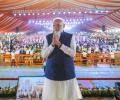
This is the time for India to plan forward fully, with the goal of Atmanirbharata, and energy security. The Persian Gulf is no longer a reliable source, points out Rajeev Srinivasan.

India now ranks among the world's top three destinations for both AI and STEM talent, holding roughly a 6 per cent share of globally mobile AI talent and a 7 per cent share of STEM talent.

'We thought everything will be back to normal within one month. Now it's four months and still a final solution is miles away.'

Portuguese football legend Cristiano Ronaldo is reportedly set to retire from international football in September, with speculation suggesting his final match will be Portugal's UEFA Nations League fixture against Wales.

'Neither do the Israelis. The two attacking parties have very little economic interest in Hormuz.'

External Affairs Minister S Jaishankar has affirmed India's commitment to ensuring issues like a free, open, and rule-based maritime order, seafarer safety, and countering terror financing receive due attention at the UN Security Council during its 2028-29 term.

'Strikes into the Gulf countries are proof that the security guarantees offered by the US are ineffective and that the Gulf countries cannot rely on American security assurances for their safety.'

US President Donald Trump announced the 'reinstatement' of an 'Iranian Blockade' in the Strait of Hormuz, stating the US would charge a 20 per cent levy on transiting cargo for providing security, while Iran warned against any US interference, reaffirming its authority over the critical waterway.
